


Reliable energy supply.
Solar parks are investments in a clean, fair, and affordable future – investments that deliver maximal yields with minimal risk. So we developed a tracking system that does them justice.

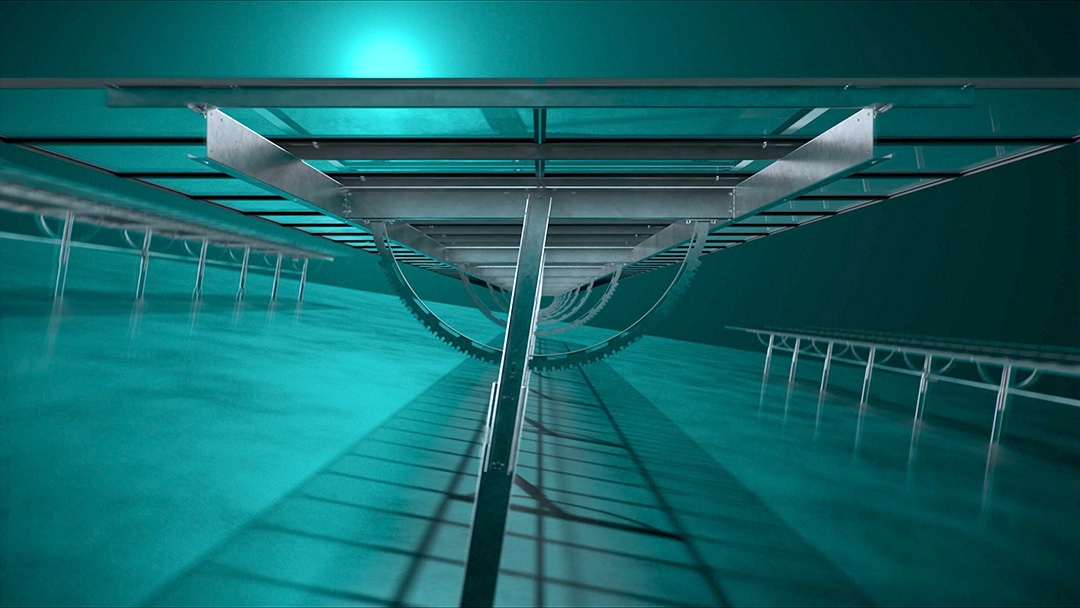
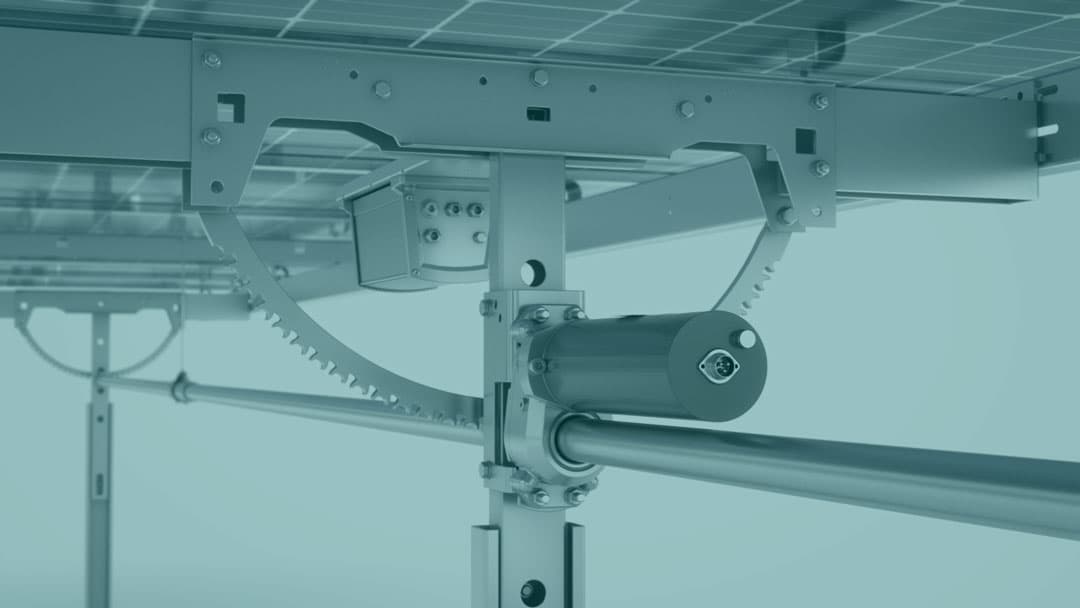
Our tracking systems work with a patented mechanical self-locking device on each post. This means that all of the resulting loads are transferred directly into the posts. Dangerous torsion or vibration effects cannot occur at all.

Tropical regions not only have the most sun, but also experience extreme weather events, such as cyclones or hurricanes. Our tracking systems have been specially developed, trialled and field-tested for such extreme loads.

The stable construction in combination with high-quality corrosion protection ensures an above-average service life.

With a movement radius of +/- 60°, the modules are optimally aligned to the sun at any time of day.

Intelligent design and heavy-duty steels enable exceptionally high material efficiency. This applies in particular to the Tracker 1P: at less than 30 kg per KW, it is around 30 per cent lighter than comparable systems on the market.

Backtracking and individually controllable tilt angles ensure the optimum energy yield on uneven terrain.

With just a few, partly pre-assembled components, our tracking systems can be installed quickly and cost-effectively. Neither cranes nor special tools are needed.

Remote maintenance, special anti-corrosion coatings and low-maintenance gears minimise the need for maintenance and safeguard your investment.

Schletter Tracking System
As stable as a fixed tilt.
Schletter Tracking System
Used worldwide.
Whether in temperate latitudes, tropical hurricane areas or the Australian outback: our tracking systems with over 1.5 GWp of installed capacity prove themselves every day all over the world – on almost every continent and in all climate zones.

Schletter Tracking System 1P
One vertical.
- Designed for use with an XXL module in vertical format
- Less than 30 kilograms/kW
- Ground-level assembly is possible without scaffolding, simpler safety precautions are required
- Optimised for bifacial and monofacial modules

Schletter Tracking System 2P
Two Vertical.
- Optimised for use with two modules, bifacial or monofacial
- Suitable for AgriPV applications
- Higher ground cover ratio: lower land consumption per installed kW (GCR > 50%)

Schletter AGRI-PV TRACKER 1P
DESIGNED FOR MODERN AGRIVOLTAIC PROJECTS
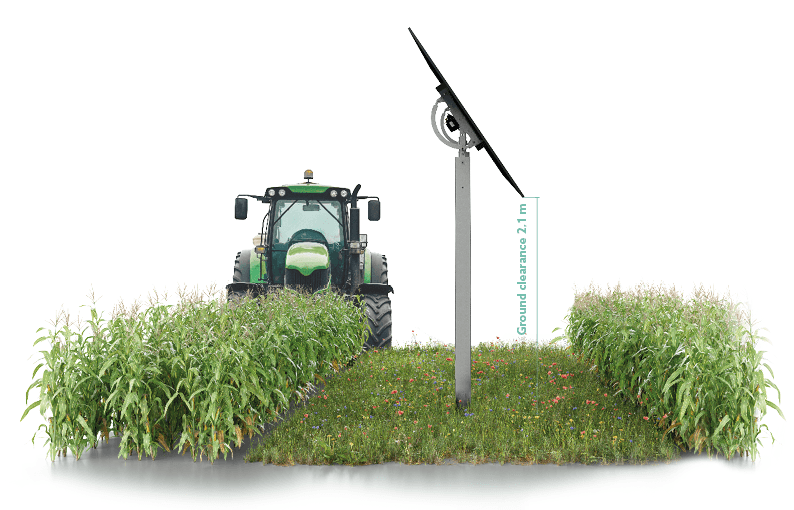
- Minimum ground clearance of 2.1 m, even at tilt angles up to 60°
- Provides ample clearance for machinery, equipment, and personnel
- Designed for DIN SPEC 91434 and European agrivoltaic frameworks
- Enables dual land use with agriculture and solar power generation
- Improves light distribution for better crop exposure
- Reduces heat build-up through improved air circulation
Service offer
Support at every stage of your project.
When erecting a ground-mounted PV power plant, all of the pieces have to fall into place – from the initial soil surveys to the operation of the system. This requires reliable partners with many years of practical experience to ensure the success of the project. Benefit from our know-how from over 60 GWp of installed PV systems. Our fasteners reliably fix solar modules all over the world and under the most adverse conditions.
FAQ
Frequently asked questions
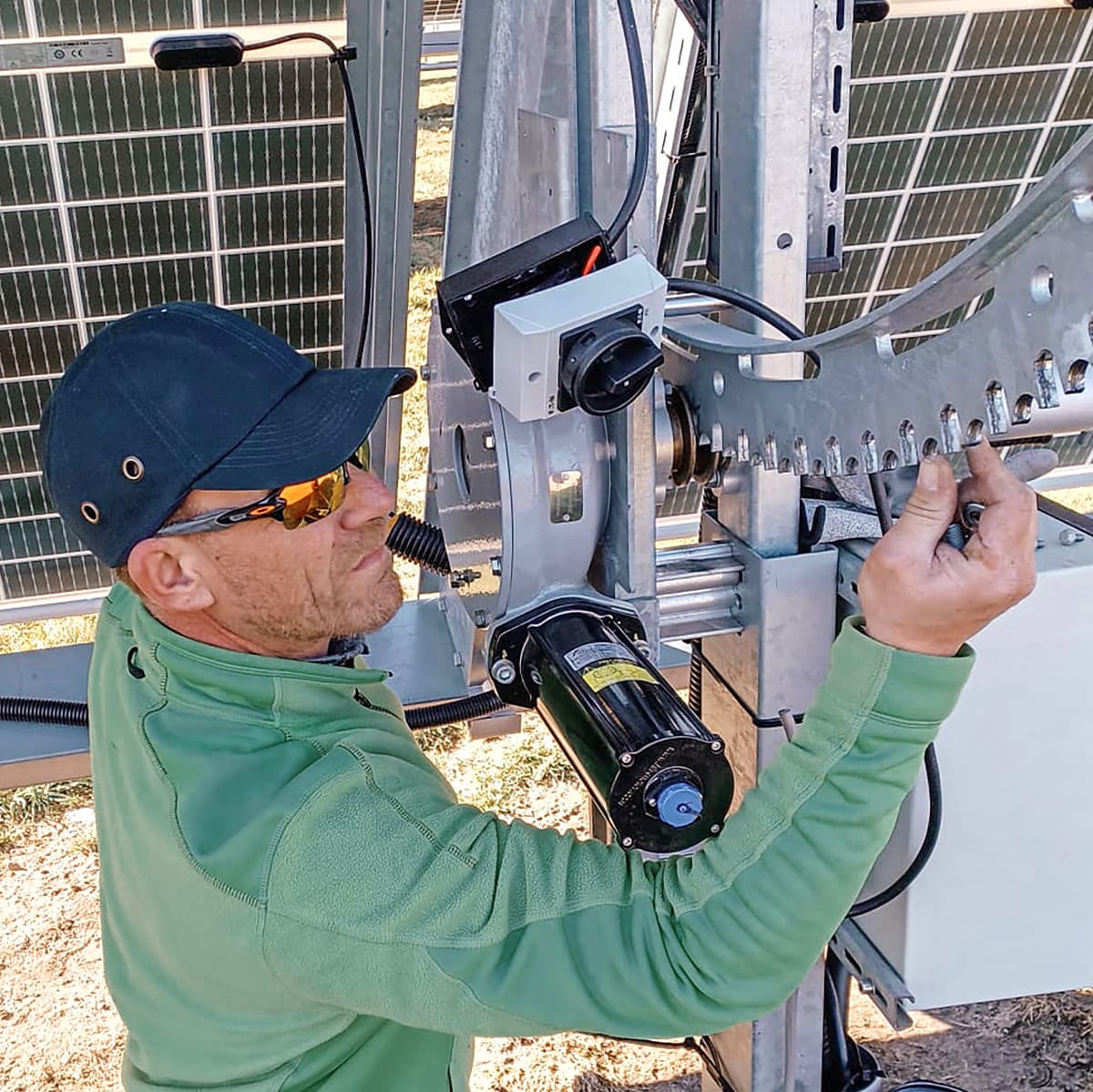
A patented mechanical self-locking device on each post makes the difference. All resulting loads are transferred directly into the posts, so dangerous torsion or vibration effects cannot occur. The patented drive system uses a so-called Maltese cross gear: drive forces go to the gears and the drive shaft, while retention forces are discharged locally into the ground through each individual post.
It depends on the module layout. The Tracking System 1P is designed for one XXL module in vertical format and allows ground-level assembly without scaffolding. The Tracking System 2P is optimised for two modules and offers a higher ground cover ratio (GCR > 50%), meaning lower land consumption per installed kW; it is also suitable for AgriPV. Both are optimised for bifacial and monofacial modules.
Schletter's tracking systems have been specially developed, trialled and field-tested for extreme loads such as cyclones and hurricanes in tropical regions. With over 1.5 GWp of installed capacity, they operate on almost every continent and in all climate zones, from temperate latitudes to tropical hurricane areas and the Australian outback.
With just a few, partly pre-assembled components, so the trackers can be installed quickly and cost-effectively without cranes or special tools. Because no heavy equipment is needed, they are particularly well suited to remote regions or difficult terrain. The low system weight saves steel and lowers delivery costs: at less than 30 kg per kW, the Tracker 1P is around 30 per cent lighter than comparable systems.
Backtracking and individually controllable tilt angles ensure the optimum energy yield on uneven terrain. With a movement radius of +/- 60°, the modules are optimally aligned to the sun at any time of day. Because the trackers can be installed without heavy equipment, Schletter also describes them as particularly well suited to difficult terrain and more remote regions.
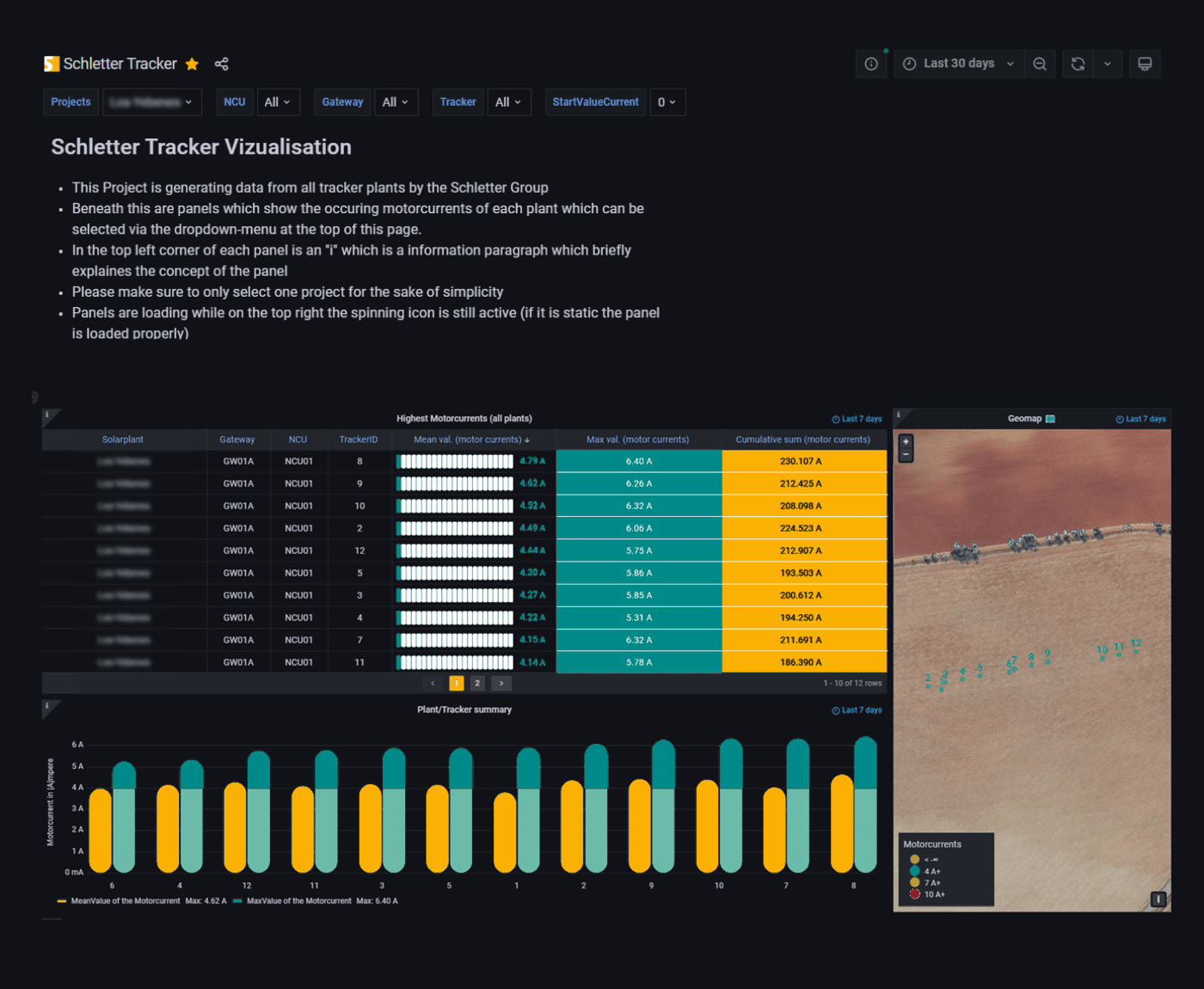
Schletter monitors all relevant operating parameters, such as motor currents, in a central database and visualises them in a dashboard. If a parameter deviates from the norm, maintenance personnel receive an alarm. Deviations are documented and a remedy log is created so recurring errors can be corrected quickly. Remote maintenance, special anti-corrosion coatings and low-maintenance gears minimise the need for maintenance.
Yes. The Schletter Agri-PV Tracker 1P offers a minimum ground clearance of 2.1 m, even at tilt angles up to 60°, leaving ample clearance for machinery, equipment and personnel. It is designed for DIN SPEC 91434 and European agrivoltaic frameworks and enables dual land use with agriculture and solar power generation. The Tracking System 2P is also suitable for AgriPV applications.
With special coatings that Schletter subjects to extensive stress tests. Schletter's view is that stability means durability: a robust system is of no use if essential parts rust through in a humid maritime climate. The stable construction combined with high-quality corrosion protection ensures an above-average service life, and special anti-corrosion coatings also help minimise maintenance.
